
Farm management in practice: lessons straight from the field
On farm visits in Mato Grosso, upCampo's founder saw how a missing history directly affects planning for the next season.
 Jonas Rotilli
CEO and founder of upCampo
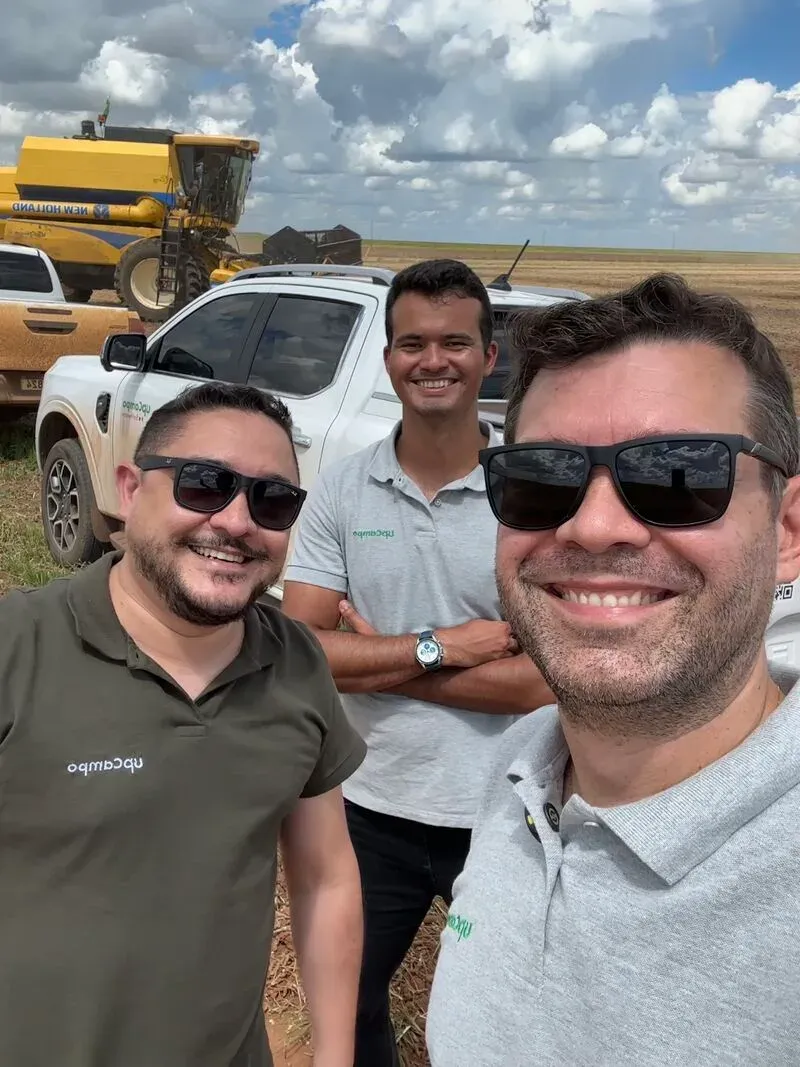
In recent days, upCampo founder Jonas Rotilli personally took part in onboarding a new team member, visiting fields alongside other members of the team in different regions of Mato Grosso.
The team drove about 1,600 km, visiting customers and seeing firsthand how each operation uses the platform day to day.
More than an onboarding process, the experience raised an important point about management in the field.
When the history is missing
During one of the visits, a unit manager — new to the operation — shared a real challenge: how hard it is to plan the next season without consolidated historical information.
Over time, part of the data had been lost. And the impact is already showing:
- analyses that have to be redone;
- searching for benchmarks in other units;
- reviewing indicators;
- slower, less confident decisions.
The routine that shapes the future
What you see here is common on many farms. In the rush of daily operations, recording information and organizing data end up taking a back seat.
But the effect shows up later — especially in moments of transition, management changes or season planning.
Information is not a luxury. It is the foundation.
The experience reinforces a central point: organized information is not a nice-to-have; it is the foundation for any more efficient planning.
A reliable history allows:
- faster decisions;
- more confident planning;
- less rework;
- more clarity about the operation.
And that is exactly where tools like upCampo make a difference, by structuring the daily routine and making sure information is available when it matters most. That is what farm operations management solves in practice.
In the field, what is not recorded today may be missed tomorrow.
The question that remains: is your operation building a history or relying on memory?