Grupo L., Tapurah (MT): 20,000 hectares of cotton and grain, with Siagri in the office and operations on upCampo
How Grupo L., in Tapurah (MT), runs 20,000 hectares of cotton and grain on upCampo, integrated with Siagri, and tracks harvest from the first module to the last.
By upCampo
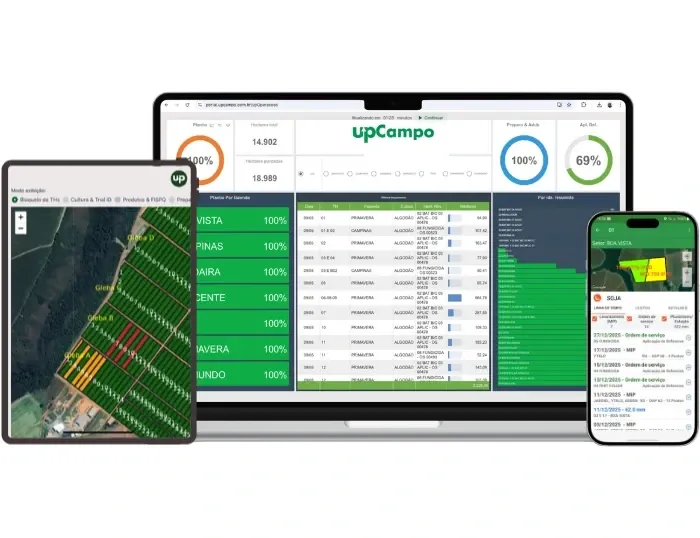
Grupo L., based in Tapurah, Mato Grosso (MT), grows cotton and grain on about 20,000 hectares, organized into three farm hubs, and is upCampo’s largest customer. The office runs the Siagri ERP; field operations run on upCampo, integrated with it: pest scouting, work orders, inventory, cotton module tracking and yield. Grain goes through drying and storage, and the lint is processed at the group’s own cotton gin. At harvest, the group tracks production and yield on a dashboard upCampo built for it, with the upCampo team alongside for the whole operation — from the first module to the last.
How Grupo L. came to upCampo
Through a referral. A consultant who already used the platform on another cotton operation in Mato Grosso brought upCampo to the group, and the operation has run on the same base ever since, season after season.
An operation run like a company
Grupo L. has a board, managers and coordinators, an agronomist, operations and maintenance crews, and a cotton gin with its own management. Workplace safety is part of the routine, with daily safety talks on the farms and at the gin. It is the kind of operation where the system has to serve many people, each with their own role.
Siagri in the office, operations on upCampo
The group did not switch ERPs to use upCampo. Siagri stays in the office, handling tax and administration; upCampo handles what happens in the field. The two systems exchange data, and the ERP receives the operating cost built from what was actually done.
Integrating two systems always takes some fine-tuning: a field has one name in the ERP and another on the ground, or an entry arrives without a matching record. In upCampo, the mapping between the two sets of records is set up once, and a record that cannot be imported does not disappear: it is listed with the reason, so it can be fixed. More on this design in how to integrate your ERP with farm operations management.
What the group does on upCampo
Pest scouting
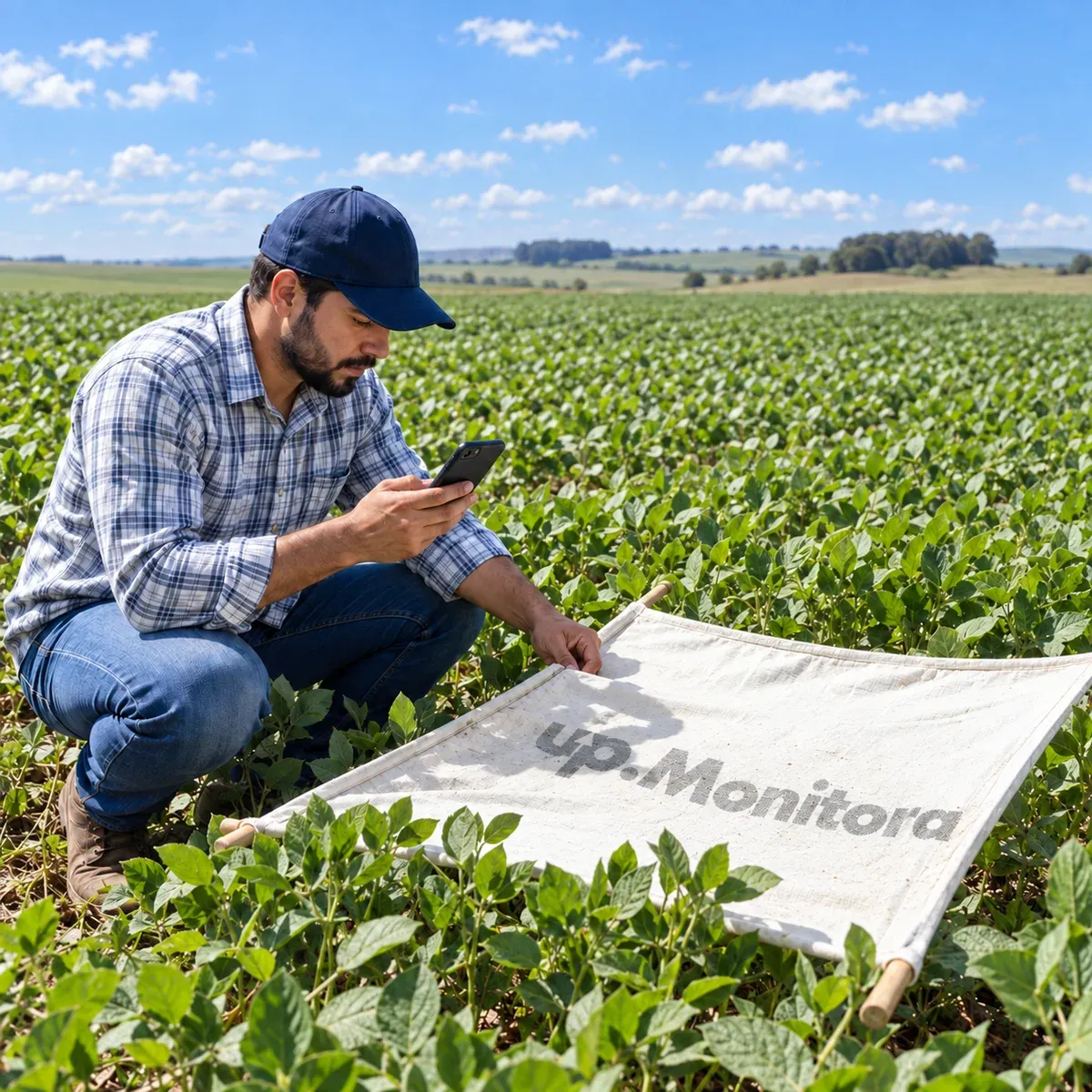
On 20,000 hectares, scouting is what generates the most records in the field. Scouts log their surveys in the app, and the results show up on the dashboard, with each pest’s value highlighted in the color of the action threshold band the farm set up. The step-by-step is in the pest scouting quick guide.
Work orders and inventory
Every field operation is a work order, with the fields, products, machine and crew. The product used in the order comes out of the farm’s inventory, and that movement is what reaches the ERP. The full path, from the incoming invoice to the issue on the order, is in how to control farm input inventory.
Modules at harvest
At harvest, the gin’s management follows the cotton on the platform from the field to the gin itself. Each module is recorded with its number, source field, variety and harvest date. Module collection groups the modules of a load and receives the weight when it arrives at the gin; that weight, split across the modules in the load, gives each one its weight.
Harvest tracked from the first module to the last
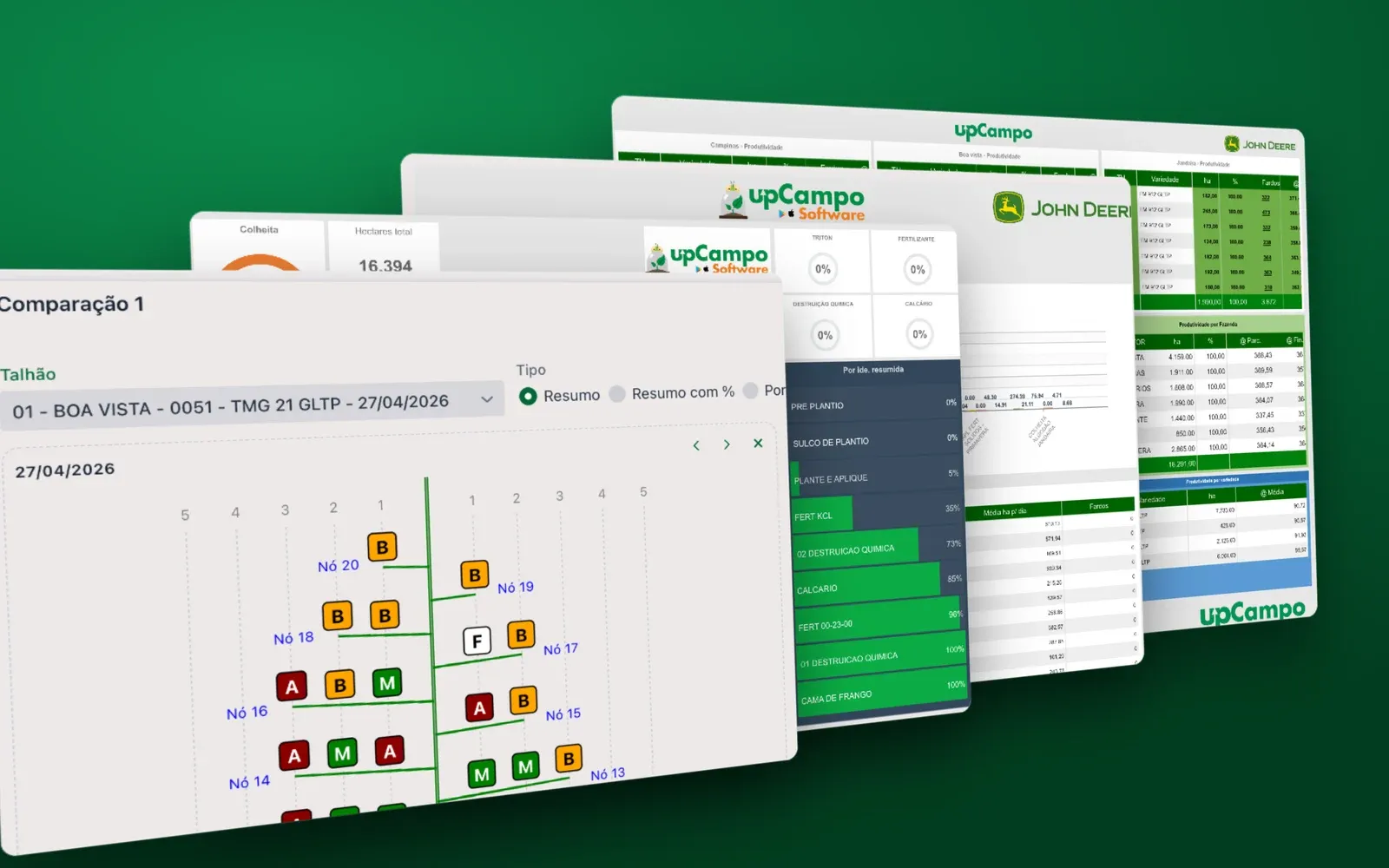
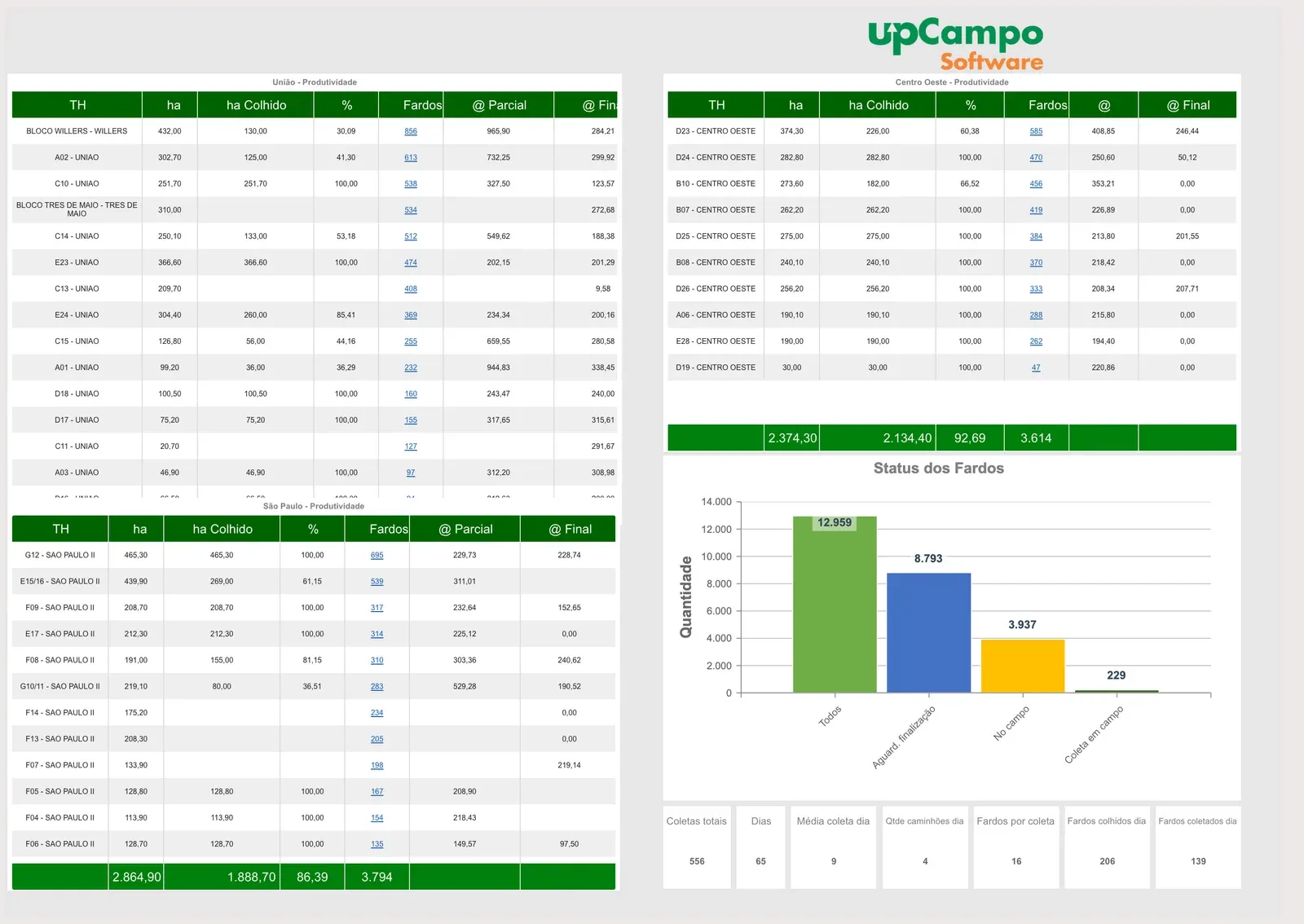
For harvest, upCampo built a dashboard so the group could follow harvest progress and yield. Because each module is linked to its source field, the harvested production goes back to the field it came from, and yield is tracked while harvest is underway.
The upCampo team did not hand over the dashboard and leave: it stayed with the group through the whole harvest, supporting the operation to the end.
Dashboards and reports built for decision-makers
The harvest dashboard was not the only one. This customer values close support and often asks for custom dashboards, reports and indicators — and the upCampo team builds them, as a report, Power BI dashboard or spreadsheet. It is a common demand on large farms, where data has to come out of the system in the format decision-makers use.
Who this case is for
Large cotton operations, with their own gin and an ERP in the office, that want crops, inventory and modules managed on a platform built for the field. See pricing or talk to the team.
Frequently asked questions
Does upCampo integrate with Siagri?
Yes. Grupo L., in Tapurah (MT), uses upCampo for its operation of about 20,000 hectares of cotton and grain, with Siagri (Aliare) in the office. The two systems exchange data: the mapping between records is set up once, and any record that cannot be imported is listed with the reason, so it can be fixed.
Do I need to replace my ERP to use upCampo?
No. In operations like Grupo L.’s, the ERP stays in the office for tax and administration, and upCampo takes over the farming side: scouting, work orders, input inventory and cotton modules. The ERP receives the cost built from what was done in the field.
Can upCampo handle a 20,000-hectare operation?
Yes. Grupo L., in Tapurah (MT), upCampo’s largest customer, has about 20,000 hectares of cotton and grain on the platform, with pest scouting, work orders, inventory and cotton module tracking.
How does upCampo track cotton modules at harvest?
Each module is recorded with its number, field, variety and harvest date. Module collection groups the modules of a load and receives the weight at the gin, which is split across them. That way, the harvested weight goes back to the source field.
Does upCampo support the farm during harvest?
Yes. For Grupo L., in Tapurah (MT), upCampo built a harvest and yield tracking dashboard, and the team stayed with the group through the whole operation, from the first module to the last.
Can I get custom dashboards and reports in upCampo?
Yes. The upCampo team builds custom dashboards, reports and indicators, delivered as a report, Power BI dashboard or spreadsheet. For Grupo L., for example, it built the harvest and yield tracking dashboard.