Fazenda C.: from an app store search to an entire cotton farm on upCampo, in Sapezal (MT)
How Fazenda C., in Sapezal (MT), started on its own with pest scouting in 2019 and now runs inventory, purchasing, fleet, NF-e, and sales on upCampo.
By upCampo
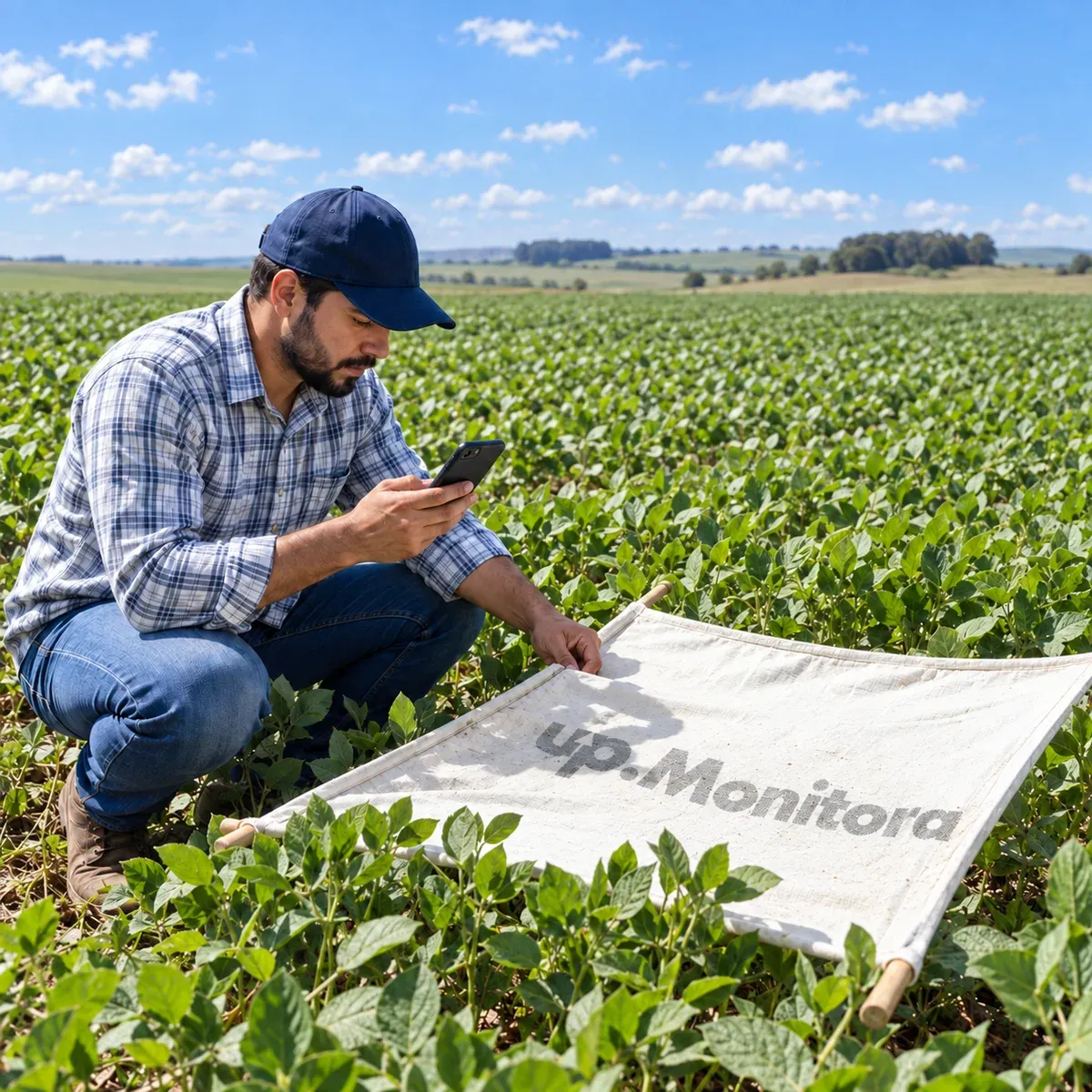
Fazenda C., in Sapezal (MT), grows cotton on about 5,000 hectares and is one of the operations that uses the most upCampo features. It started without any salesperson: in 2019, the farming manager found the app in the app store and set up almost the entire farm on his own. Today pest scouting, work orders, inventory, purchasing, fleet, NF-e (Brazilian e-invoice), storage, and sales contracts are all on upCampo; the group’s finance team is in Curitiba, on another system.
How it started: the manager set up the farm on his own
When the upCampo team got in touch, the farming manager was already using the system every day for pest scouting. From then on, he took part in the platform’s evolution, suggesting improvements and helping build modules that now serve other farms.
Today, anyone who wants to try it doesn’t have to go it alone: the free month starts with onboarding done together with the upCampo team.
The setup: operations on upCampo, finance in Curitiba
Fazenda C. is part of a group that also raises cattle. Modernizing farm management was a way to bring more organization and control to the operation. The resulting design is simple: the group’s finance stays in Curitiba; the entire farming operation is now organized on upCampo.
What the farm does on upCampo
Pest scouting and work orders
This is where it all began. Scouting is done in the app, and field operations become work orders, with fields, products, machine, and crew. How a work order works is explained in the operations quick guide.
Inventory, requisitions, quotes, and purchasing
The farm runs its entire purchasing chain on upCampo. A department requests material through a Requisition: whatever is in stock is drawn from inventory, and whatever is missing goes to a Quote, where each supplier fills in prices through a link and the farm compares item by item before generating the purchase order. Every item has a trail: from the work order to the requisition, then to the quote, the order, and the invoice that delivered it.
Fleet maintenance and fueling
Each fueling records the machine, the pump, the liters, and the hour meter — and the hour meter is what makes the preventive maintenance plan come due. The full chain, from fueling to maintenance order, is in the fleet quick guide and on fleet and maintenance.
NF-e issuance
The outgoing electronic invoice is issued right from upCampo: the farm builds the invoice, sends it to SEFAZ (the state tax authority), tracks the response and, if needed, cancels it or issues a correction letter, as described on the NFE Transmission screen.
Storage, sales, and sales contracts
Stored and sold production is also on the platform. The Sales/Purchase Contract records the closed deal — how much product, at what price, to ship when — and the outgoing load ticket deducts each load from the contract.
Integration with Solinftec
The farm recently started the integration with Solinftec, which uses data generated by the machines to feed upCampo work orders. The step-by-step is in upCampo x Solinftec integration.
UPí in daily work
The farming manager is now one of the most active users of UPí, upCampo’s artificial intelligence. On WhatsApp, he has already checked pests, machines, work orders, inventory, and farm indicators — without opening the portal.
What hasn’t come in yet
The finance module. Accounts payable and receivable remain with the group’s finance team in Curitiba, and the farming operation stays on upCampo. It shows that the platform doesn’t require all or nothing.
What changed
In the upCampo team’s view, the farm gained organization and its operational structure grew. Over the same period, it expanded its silos, renovated its headquarters, and built a cotton gin — the farm’s own investments, made with management already organized on the platform.
“upCampo has become the foundation of how our farm is organized. Today we manage scouting, inventory, costs, purchasing, maintenance, and the whole operation within the platform. It has brought much more clarity to day-to-day management.”
— Farming manager at Fazenda C.
Who this case is for
Cotton farms that want to start with one problem — scouting — and grow from there to the whole operation, without switching systems along the way. See cotton on upCampo, pricing, or talk to the team.
Frequently asked questions
Can a cotton farm run its entire operation on upCampo?
Yes. Fazenda C., in Sapezal (MT), runs about 5,000 hectares of cotton on upCampo: pest scouting, work orders, inventory, requisitions, quotes, purchasing, fleet maintenance, fueling, NF-e issuance, storage, and sales contracts. The only module it doesn’t use yet is finance.
Does upCampo issue electronic invoices (NF-e)?
Yes. The farm builds the outgoing NF-e in upCampo, sends it to SEFAZ, tracks the response, and can cancel it or issue a correction letter. Fazenda C., in Sapezal (MT), issues its operation’s invoices through the platform.
Does upCampo handle quotes and purchase orders?
Yes. The chain is Requisition, Quote, and Purchase order: the supplier fills in prices through a link, the farm compares item by item and generates the order. Every item has a trail from the work order to the invoice that delivered it.
Can I use upCampo for operations and keep finance on another system?
Yes. That is the case at Fazenda C.: the group’s finance is in Curitiba, on another system, and the entire farming operation runs on upCampo. Modules are contracted based on what the farm wants to solve.
Does upCampo integrate with Solinftec?
Yes. The integration uses machine-generated data, via Solinftec, to feed work orders in upCampo. Fazenda C., in Sapezal (MT), recently started using this integration.
Can I look up farm data on WhatsApp?
Yes, with UPí, upCampo’s artificial intelligence. The farming manager at Fazenda C. has already used it to check pests, machines, work orders, inventory, and farm indicators.